Audio Gear Checklist for Documentary Interviews
By Nora Vance · Published · 5 min read
Documentary interviews happen in kitchens, workshops, windblown fields, and noisy street corners. The gear you carry must deliver broadcast-clean dialogue without a crew of six. This checklist covers the microphones, recorders, and redundancy that experienced field recordists actually pack.
Every item here earns its place by solving a specific field problem: wind, radio interference, battery failure, or a subject who whispers. Expect to spend $1,500–$4,000 on a capable two-person interview kit, or $5,000+ for a premium multi-channel setup.
Microphones: Lavaliers, Shotguns, and a Handheld
Lavaliers are the backbone of documentary interviews. Wired lavs are the most reliable and cheapest option, but for walking subjects or wide shots you need wireless. A solid prosumer wireless system costs $600–$1,200 for a transmitter/receiver pair, while premium systems run $2,500–$4,000. Always carry two lavs per subject—one for the collar, one as backup—because cables fail and clothing rustles.
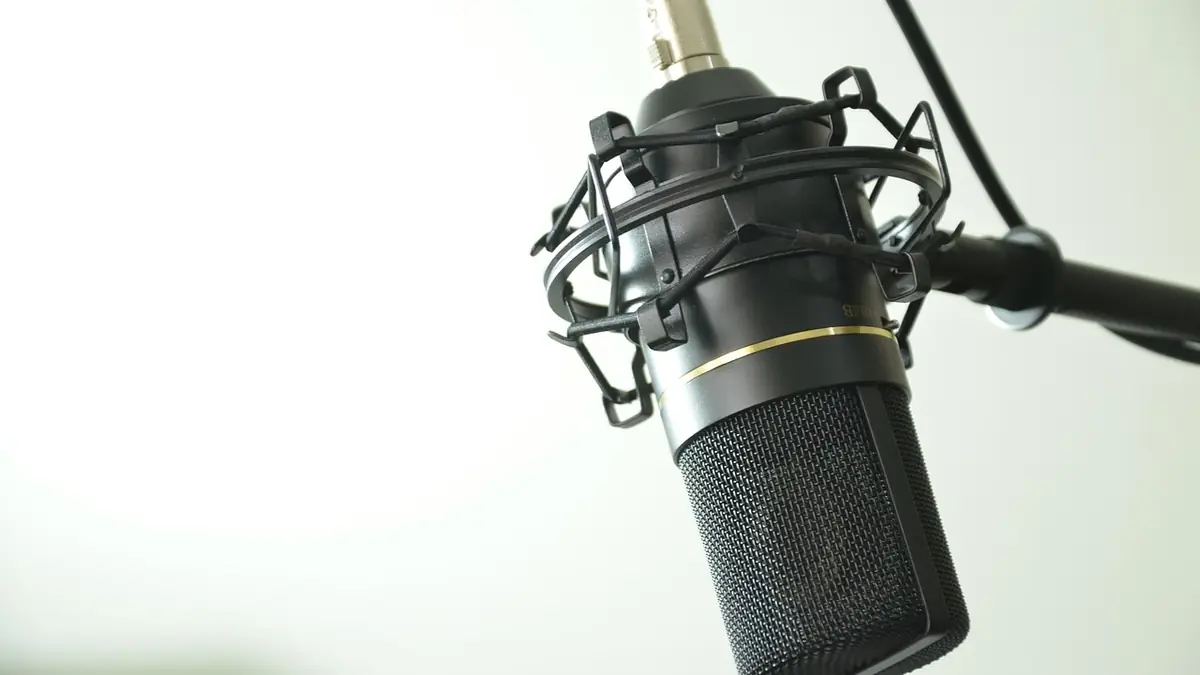
A shotgun microphone on a boom handles sit-down interviews and gives you a natural, roomier sound than a lav alone. A short shotgun in the $800–$1,500 range is the sweet spot; longer interference tubes reject more off-axis noise but are heavier. Add a handheld dynamic mic ($150–$400) for run-and-gun vox pops or when a subject refuses a lav.
Wind protection is not optional. A foam windscreen is nearly useless outdoors; a fur-covered zeppelin or a slip-on windshield ($80–$300) is essential. For lavs, use a 2–3 cm foam or fur cover and tape the cable in a loose loop to avoid clothing noise. Test every mic on location before the subject arrives.
- 2× wired lavaliers per subject (backup)
- 1× dual-channel wireless system for mobile subjects
- 1× short shotgun + boom pole (3–4 m)
- 1× handheld dynamic mic for street interviews
- Wind protection: zeppelin for shotgun, fur covers for lavs
Recorders and Interfaces: Channels, Preamps, and Media
Your recorder is the heart of the kit. For two-person interviews, a 4-channel field recorder with clean preamps and 48V phantom power is the minimum; 6–8 channels give room for a boom, two lavs, and a backup track. Expect $500–$1,200 for a solid prosumer unit and $2,500–$4,500 for a premium recorder with timecode and dual media slots.
Preamps matter more than sample rate. Look for recorders with low noise floor (around -120 dBu EIN) and enough gain (60+ dB) for quiet lavs. If your recorder lacks good preamps, add a compact mixer or preamp. Always record at 24-bit/48 kHz; higher rates eat storage without audible benefit for dialogue.
Media redundancy is non-negotiable. Use dual SD card slots set to simultaneous recording, or a recorder with internal storage plus a card. Format cards in the recorder before each shoot and carry at least two spare cards. A 32 GB card holds roughly 5 hours of 24-bit/48 kHz 4-channel audio—enough for a full interview day.
- 4+ channel field recorder with 48V phantom power
- Dual media slots for simultaneous recording
- Spare SD cards (2× 32 GB minimum)
- External preamp if recorder gain is noisy
- Timecode generator for multi-camera sync (optional)
Monitoring: Headphones and Confidence
You cannot judge audio from a camera's built-in speaker. Closed-back headphones with good isolation ($100–$300) let you hear clothing rustle, RF hits, and low-level hum before they ruin a take. Bring two pairs: one for you, one for a producer or director to monitor.
Monitoring is also a diagnostic tool. If you hear a consistent hiss, raise the input gain or move the mic closer. If you hear intermittent clicks, suspect a loose cable or phone interference. Keep a small headphone amplifier or a 3.5 mm-to-1/4-inch adapter in your kit; field mixers often use different connectors.
Always do a 30-second test recording and play it back through the headphones. This catches routing errors—like recording the boom on channel 2 but monitoring channel 1—that are invisible on meters. Make test playback a ritual before every interview.
- 2× closed-back headphones (one spare)
- 3.5 mm to 1/4-inch adapter
- Backup headphone cable
- Small headphone amp for high-impedance cans
Power and Cabling: The Silent Killers
Batteries fail at the worst moment. Carry at least three times the number of AA batteries you think you need—a wireless transmitter often eats two AAs every 4–6 hours. Rechargeable NiMH AAs (eneloop-style) save money and waste; bring a charger and a power strip. For recorders, use an AC adapter when possible and keep a USB power bank as backup.
Cables are the most common point of failure. Use XLR cables with Neutrik connectors and strain relief; cheap cables crackle and lose channels. Bring two spare XLR cables per mic and a roll of gaffer tape to secure connections. Label every cable at both ends to speed troubleshooting.
RF interference from phones, Wi-Fi, and LED lights is a real threat. Keep wireless receivers away from metal surfaces and scan for free frequencies before each take. If you hear dropouts, switch to a wired lav or move the receiver closer to the transmitter.
- 3× the expected AA batteries (NiMH + charger)
- 2× spare XLR cables per mic
- Gaffer tape for cable management
- USB power bank for recorder backup
- Frequency scanner for wireless
| Gear category | Budget option | Mid-range | Premium | Notes |
|---|---|---|---|---|
| Wired lavalier | $20–$80 | $100–$250 | $300–$500 | Buy 2 per subject |
| Wireless lav system | $150–$400 | $600–$1,200 | $2,500–$4,000 | Dual-channel preferred |
| Shotgun microphone | $200–$400 | $800–$1,500 | $1,500–$2,500 | Short shotgun for interiors |
| Field recorder (4–8 ch) | $200–$500 | $500–$1,200 | $2,500–$4,500 | Dual media slots key |
| Headphones | $50–$100 | $100–$300 | $300–$500 | Closed-back, 2 pairs |
| Wind protection | $20–$50 | $80–$150 | $200–$300 | Zeppelin + fur covers |
Backup and Redundancy: The Two-Track Rule
Professionals record two tracks: a primary lav and a backup boom or second lav. If one fails, the other saves the interview. Set the backup track 6–10 dB lower to avoid clipping if the subject laughs or shouts. This redundancy costs nothing but a channel and a few seconds of setup.
Card failure is rare but catastrophic. Use dual recording to two cards, or copy files to a laptop or SSD at every break. A portable SSD ($100–$200 for 1 TB) weighs little and saves hours of grief. Never format a card until you have two verified copies.
If your recorder lacks dual slots, record a safety track to a second device—even a phone with a lavalier mic can serve as an emergency backup. The goal is not perfect sound on every device; it is having something usable when the primary fails.
- Record primary + backup track on separate channels
- Dual SD card simultaneous recording
- Portable SSD for on-set file copies
- Never format until two copies exist
Packing and Field Prep: A Repeatable Workflow
A checklist prevents forgotten gear. Pack mics, recorders, batteries, and cables in a single hard case with foam cutouts; label each compartment. Before leaving, test every mic and cable end-to-end. This 10-minute ritual catches 90% of field failures.
On location, scout for noise sources: refrigerators, air conditioners, fluorescent lights, and traffic. Ask the subject to turn off phones and Wi-Fi. Place the boom mic just out of frame and aim it at the subject's chest, not the mouth, to reduce plosives. If you are scouting a new space, a structured location walk-through helps you plan audio and camera positions—see our location scouting checklist for a practical framework.
For multi-person shoots, a call sheet that lists audio gear and responsibilities prevents chaos. Our guide on how to write a call sheet that prevents chaos includes a gear section you can adapt. And if you are budgeting crew time for audio setup, our breakdown of film crew rates: day vs. flat fees explains typical ranges.
- Hard case with foam cutouts
- Pre-shoot 10-minute cable and mic test
- Noise survey: fridge, AC, lights, phones
- Boom aim at chest, not mouth
- Label every cable and compartment
- Carry two lavs per subject and record a backup track 6–10 dB lower.
- Use a 4-channel recorder with dual SD slots and clean preamps (60+ dB gain).
- Bring three times the AA batteries you expect and two spare XLR cables per mic.
- Test every mic, cable, and routing before the subject arrives; play back a 30-second test.
Nora reviews gear and post-production tools with an eye on real-world budgets and turnaround times. Her articles help teams choose equipment and workflows that fit their scale.