Amore: A Look at the Project and Its Production Context
By Maya Quinn · Published · 4 min read

Amore is the kind of project that sounds simple on paper: one clear idea, a small cast, and a tight visual identity. In practice, projects like this live or die on production decisions made long before the first shot. This overview covers what the Amore project involves and how its production context shapes the choices a team has to make.
Rather than treating it as a single title, this piece looks at Amore as a production case: the format it fits into, the crew and equipment it needs, the budget bands that make sense, and the schedule risks that tend to show up. The numbers below are typical ranges, not promises.
What the Amore Project Is
Amore is a compact, story-driven production built around a single central theme rather than a sprawling narrative. That means the creative burden sits with a small number of key collaborators: a director, a producer, and a lead performer or two who carry most of the screen time. Projects with this shape usually run between three and eight minutes for a short-form cut, or 15 to 25 minutes for a longer piece.
The production context matters as much as the premise. Amore-style work is typically funded as either a self-financed proof of concept or a commissioned piece with a client or label attached. That single fact changes nearly everything downstream: who approves the script, how many shoot days are realistic, and whether post-production is handled in-house or outsourced to a finishing house.
- Format: narrative short or branded story piece
- Typical runtime: 3-8 min short form, 15-25 min long form
- Core team: director, producer, lead cast, DP
Format, Runtime, and Delivery
Delivery specs shape the shoot more than most people expect. If Amore is headed for social platforms, the master needs vertical and square versions, plus captions burned in for sound-off viewing. If it is a festival or screening piece, a 2K or 4K master in a flat or scope ratio is the norm, with a separate broadcast-safe version. Budgeting for two or three deliverable versions adds roughly 10 to 20 percent to post costs.
Runtime is a budget lever, not just an artistic choice. Cutting from eight minutes to five can remove a full setup day and a scene's worth of lighting and art. Smart teams lock the script early, shoot coverage that supports an edit two minutes shorter than the target, and resist the urge to add scenes once the schedule is set.
- Vertical, square, and 16:9 masters
- Burned-in captions for social cuts
- Keep a textless version for future edits
Crew and Equipment Needs
A project the size of Amore rarely needs a 30-person crew, but it does need the right eight to twelve people. A typical core is a director, producer, first AD, DP, gaffer, grip, sound recordist, and hair/makeup, with a PA or two. On smaller cuts, the DP may operate and a single grip covers lighting support. The mistake is cutting sound or makeup first; both cost far more to fix in post than to staff on the day.
Equipment follows the look. A two-camera package with a modest lighting kit, a few flags and diffusion, and a reliable sound rig covers most interior and controlled exterior work. Day rates for crew vary widely by market, so build the budget from quoted day rates rather than averages. If you are still working out how to structure those numbers, our guide to day rates versus flat fees explains where each model fits.
| Tier | Budget range | Shoot days | Crew size | Post scope |
|---|---|---|---|---|
| Lean | $8,000-$25,000 | 2-3 | 8-10 | In-house edit, basic mix |
| Mid-range | $30,000-$75,000 | 3-4 | 12-18 | Colorist, sound mix, VFX touch-ups |
| Premium | $80,000-$150,000+ | 4-6 | 20-30 | Full finishing, original score |
| Self-financed short | $3,000-$12,000 | 1-2 | 4-7 | Editor-led, minimal finishing |
Budget Ranges
For a project with Amore's scope, a realistic lean budget sits between roughly $8,000 and $25,000, covering two to three shoot days, a small crew, basic equipment, one or two locations, and a straightforward post workflow. A mid-range version with a larger crew, a built set or premium location, and a dedicated colorist and mixer typically lands between $30,000 and $75,000. Above that, you are paying for name talent, stunts, or heavy VFX.
Where the money goes is predictable. Below-the-line labor usually takes 35 to 45 percent, locations and permits 10 to 15 percent, equipment 10 to 15 percent, and post 15 to 25 percent. Contingency should be 10 percent minimum. If a client or commissioner is involved, pricing the work properly matters more than trimming the shoot; our breakdown of how to price video projects is a useful cross-check on margins.
Schedule and Production Risks
The most common failure on a project this size is over-scheduling the first day. Crews are freshest on day one, but that is also when locations are least proven and logistics are least tested. Put the simplest, most controllable scenes first and save the emotionally heavy or technically complex work for day two, when the team has found its rhythm. Two shoot days is usually the sweet spot for a project of this scale.
Weather, permits, and cast availability are the three risks that wreck timelines. Build a weather cover set, confirm location access in writing at least a week out, and hold a backup date for any exterior-dependent scene. If you are planning the calendar, our two-day shoot planning guide covers how to schedule a two-day shoot without overtime and where the hidden hour sinks are.
Paperwork and Clearances
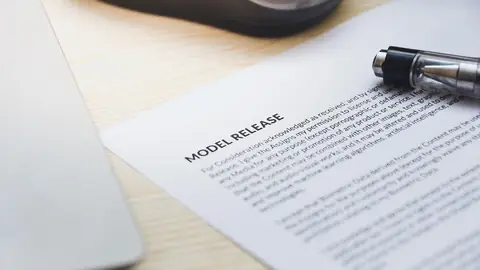
Every person who appears on camera needs a signed release, and every location needs a written agreement covering dates, access hours, and what can be moved or altered. Music is the other common trap: a track that feels perfect in the edit can cost more than the entire shoot to license. Budget for library or custom music from the start, and get the license in writing before the final mix.
Clearances also cover art on walls, branded products in frame, and any real business signage. A ten-minute walkthrough with a phone camera before the shoot catches most of these. For a full list, our producer's checklist for release forms and clearances covers cast, location, and artwork in one pass.
- Amore works best as a tight, story-first production with two to three shoot days.
- A lean budget of $8,000-$25,000 covers the essentials; mid-range runs $30,000-$75,000.
- Crew labor is the largest line item at roughly 35-45 percent of spend.
- Releases, location agreements, and music licenses are the most common late-stage blockers.
Maya has spent years covering independent production workflows and the practical math behind creative projects. She focuses on clear, actionable guides for producers working with limited resources.